By Liz Pritchard
CLICK TO READ ON NEW MEXICO NEWS PORT

To identify the cause and effect of misinformation in the media, a workshop was held this weekend at the University of New Mexico. Guest speakers detailed the ways the media has been projecting this content to the public, especially in Latino communities.
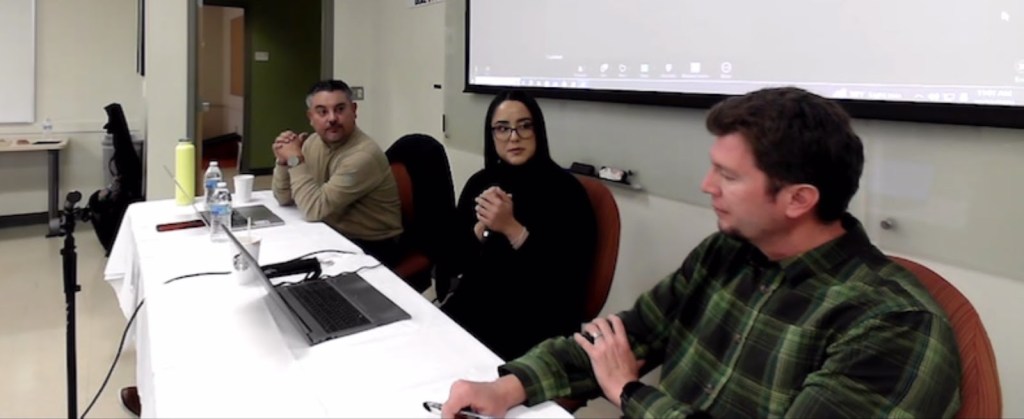
The UNM chapter for the National Association of Hispanic Journalists hosted a workshop and discussion panel on the issues surrounding false information in the media. Students and faculty were encouraged to attend and learn how harmful media is impacting this election season.
The discussion panel included Dr. Gabriel Sanchez, Executive Director of the UNM Center for Social Policy and Dan Boyd, the Capitol Bureau Chief at the Albuquerque Journal. The panel focused on the spread of misinformation and disinformation particularly surrounding immigration and within Latino communities that are most susceptible. Around 20 students attended the morning discussion and excitement to learn from the industry experts filled the room. As Election Day nears, attendees were able to take away advice on combating the false narratives that may come out of the media and encouraged to dig deeper when this content arises.
Rhetoric on political information has become increasingly common for US citizens to hear and read about, according to Dr. Sanchez during his presentation. These false narratives make their way into the mainstream media and target minority communities.
“What we’re dealing with now is much scarier, and that’s not coming from Russia. It’s not coming from somebody sitting in a basement cranking this stuff out. It’s coming from elected officials and candidates,” Sanchez said.
In a poll released by the Kaiser Family Foundation, 80 percent of adults in the US said that they have heard false claims about immigrants from an elected official or candidate during the election season. Although there have been many claims proven to be false, this information continues to be widely broadcasted to the public. Specifically the Latino community has been highly vulnerable to be targeted.
For Spanish media outlets in the US, there has been an increase of misinformation being shared. Due to the lack of fact-checking, these media outlets are more likely to receive false information and share it with their viewers. This has led to a shift in values amongst Latinos. In 2020, only 10% of those polled believed protecting the border was a top priority. This year, that number increased to 24%.
“Misinformation happens every election cycle,” according to the Albuquerque Journal’s Dan Boyd. “With some people, you can present the facts and it’s still not going to change their mind,” Boyd said. “The best thing that journalists can do is be transparent and hold those spreading it accountable.”
The panel ended with comments from the panelists on what to be careful of when messages are being broadly shared.
“You know some outlets use online polling and that kind of thing…you get what you pay for so sometimes these easy polls, you’re going to have to be a little more wary of the accuracy or kind of the methodology that’s used in that.” Boyd says.
Liz Pritchard is a student at the University of New Mexico. Follow her journalism at lightfromalamp.com.


Leave a Reply